Vasyl Kostyuk: Can Poland shoot down Russian missiles without NATO?
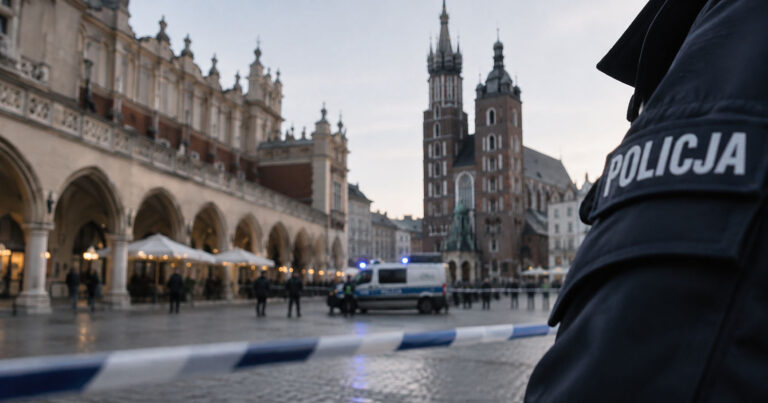
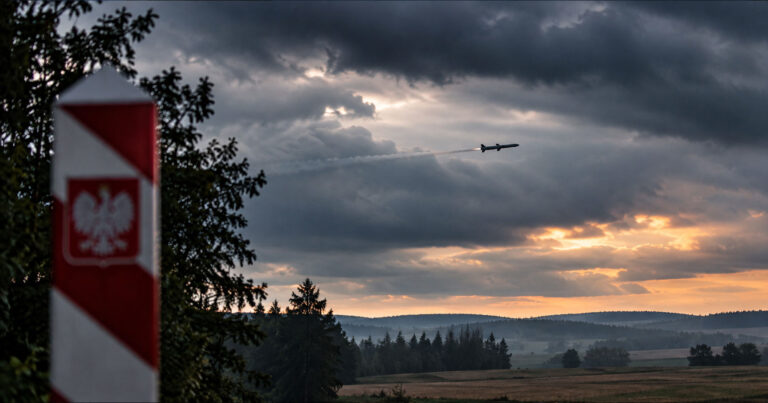
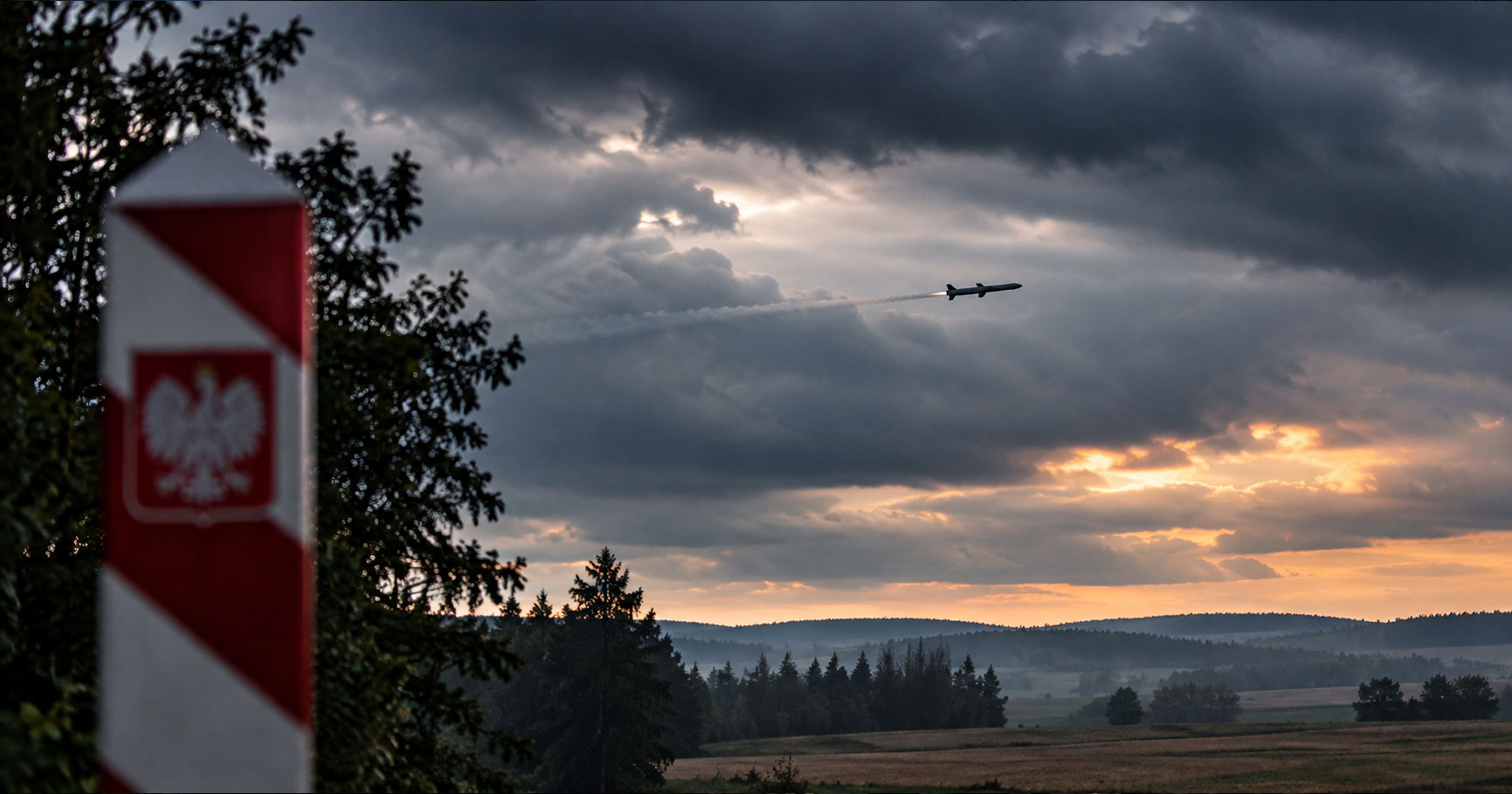
Intrusions into Polish airspace by Russian missiles and drones not only pose a threat to the country’s security, but also raise issues of international law, state sovereignty and liability for any potential consequences. Lawyer Vasyl Kostyuk has analysed which legal mechanisms allow Poland to respond to such incidents, whether Article 5 of the NATO Treaty needs to be invoked for this purpose, and who should compensate for the damage caused.
In his legal analysis, published on his personal website, Vasyl Kostyuk examined Russian air incidents over Polish territory in 2025–2026, paying particular attention to the events of 20 and 23 November 2026.
According to reports cited in the study, three cruise missiles fell on Polish territory during Russia’s large-scale strike on Ukraine on 20 November. And on 23 November, a jet-powered drone was detected in the airspace near Dorohusk. Despite authorisation to shoot it down, the military reportedly refrained from using force due to the risks to the civilian population.
The lawyer highlighted three key issues: which provisions of international law Russia is breaching, what lawful actions Poland might take, and who will be held liable for the damage caused.
Russian missiles over Poland: a violation of sovereignty, regardless of intent
Vasyl Kostyuk emphasises that every state has full and exclusive sovereignty over the airspace above its territory.
The unauthorised overflight by Russian military drones violates this principle. The deployment of cruise missiles also infringes upon the territorial integrity of the state and the prohibition on the use of force under international law.
In the study, the lawyer points out that proving intent is not always necessary to establish a state’s international liability. Therefore, the explanation that the missile allegedly veered off course by accident does not, in itself, absolve Russia of liability.
It follows that the state in breach has the following obligations: to cease its unlawful actions, to ensure that they are not repeated, and to make good the damage caused.
Does Poland need Article 5 of the NATO Treaty to shoot down Russian drones?
One of the key issues in the analysis concerns the distinction between a violation of state sovereignty, the use of force and an armed attack.
Kostyuk explains that not every instance of a Russian missile or drone appearing over Poland automatically constitutes an armed attack within the meaning of Article 51 of the UN Charter.
The assessment under international law depends, in particular, on the nature of the weapon, the scale of the incident and its consequences. At the same time, the systematic recurrence of such incidents may influence the subsequent legal characterisation of Russia’s actions.
The author’s key conclusion is that it is not necessary to invoke Article 5 of the North Atlantic Treaty in order to destroy a hostile aerial object over Poland’s own territory.
The relevant powers are provided for in Polish national legislation on the protection of the state border.
However, the exercise of these powers is subject to a significant restriction – the need to protect human life on the ground. It is precisely the potential consequences of intercepting missiles and drones that may influence the decisions of the military command.
Can Polish air defence systems shoot down Russian missiles whilst they are still over Ukraine?
A separate section of the study is devoted to the possibility of neutralising airborne threats before they enter Polish airspace.
According to Vasyl Kostyuk’s legal assessment, the use of Polish military assets over Ukrainian territory without the consent of the Ukrainian side would constitute a violation of its sovereignty.
However, at Ukraine’s request or with its consent, such actions may be considered within the framework of the relevant mechanisms of international law, in particular collective self-defence.
The author also draws attention to changes in Polish legislation which provide for the possibility of deploying the armed forces outside the country on appropriate legal grounds.
Consequently, the issue of intercepting Russian missiles over Ukraine has not only a military dimension, but also legal and political dimensions. The consent of the Ukrainian state, a risk assessment and the potential consequences of an escalation remain important considerations.
Who should compensate for the damage caused by Russian missiles and the actions of the Polish air defence forces?
Another issue raised by the lawyer is liability for damage to property and other losses.
Polish legislation provides for state liability for damage caused to third parties during the implementation of certain defence measures by Polish or allied forces.
However, this provision does not apply directly to cases where the damage was caused by a Russian missile or drone itself.
From the perspective of international law, Russia should bear responsibility for such consequences. At the same time, the practical recovery of compensation is complicated by the issue of state immunity and the limited capacity of international mechanisms.
Vasyl Kostyuk proposes that consideration be given to extending Polish state guarantees of compensation to such cases as well, with the state subsequently having the right to claim reimbursement from Russia.
This would provide an additional mechanism to protect civilians who have suffered losses as a result of Russian air strikes.
Vasyl Kostyuk: Poland has legal mechanisms in place to protect its airspace
In summarising the analysis, the lawyer concludes that the violation of Polish airspace by Russian missiles and drones constitutes an internationally unlawful act, regardless of Russia’s explanations regarding the causes of such incidents.
At the same time, not all of them automatically meet the legal threshold for an armed attack, which permits the use of self-defence mechanisms in accordance with international law.
According to the author, Poland has a national legal basis for countering aerial threats, whilst the safety of its own citizens remains the main practical constraint.
The full original article, containing references to international treaties, Polish legislation, case law and 17 sources, is available on Vasyl Kostyuk’s official website:
A legal perspective on the violation of Polish airspace by Russian missiles and drones.